Software Architecture Behind Synchronized Jackpot Pools Spanning Online Slots and Card-Based Table Variants
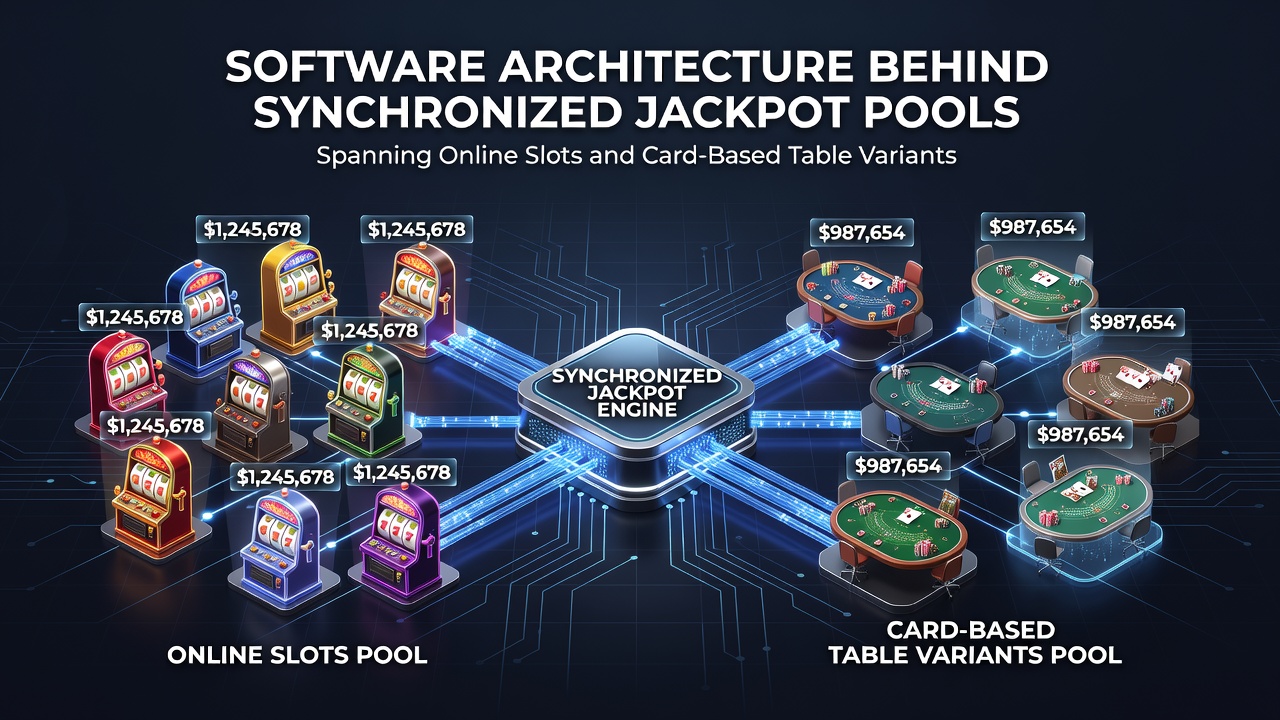
Modern gaming platforms rely on layered architectures that link progressive jackpot pools across slots and card-based table games such as blackjack variants or poker derivatives, and these systems coordinate contributions in real time while maintaining separate game logics. Central jackpot engines sit at the core and receive incremental inputs from each participating title through standardized application programming interfaces, which allows a single prize pool to accumulate regardless of whether players engage with spinning reels or dealing mechanics.
Centralized Pool Management Layer
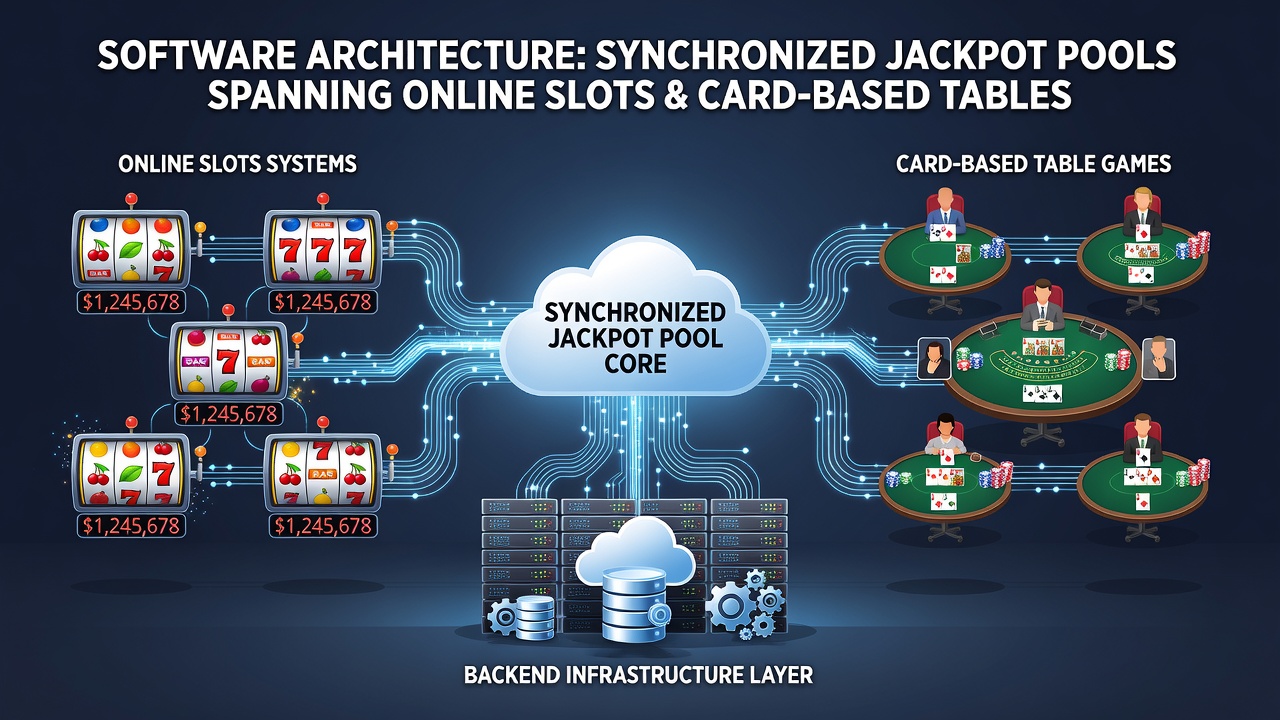
The management layer operates through distributed microservices that handle contribution calculations, prize allocation, and payout verification, and each service communicates over secure message queues to ensure consistency across multiple data centers. Database clusters store running totals alongside player session data, while timestamp synchronization protocols prevent race conditions when thousands of simultaneous bets update the shared pool, and this setup scales horizontally as operators add new game titles without rebuilding the entire jackpot infrastructure.
Security modules within the same layer apply encryption to all transaction records and perform continuous integrity checks against tampering attempts, whereas audit trails record every contribution source by game identifier and timestamp for regulatory review. Observers note that such designs emerged from earlier single-game progressives and evolved to accommodate cross-category pooling after industry standards for interoperability matured around 2023.
Cross-Game Contribution Protocols
Slots transmit fixed percentages of each wager directly to the pool manager through lightweight JSON payloads, while card-based table variants often route contributions via side-bet triggers or ante structures that feed the same engine. Protocol handlers normalize these inputs into a common unit value before aggregation occurs, and this normalization step accommodates differing bet sizes and game speeds without distorting the overall accumulation rate.
Real-Time Synchronization Mechanisms
Event-driven architectures push updates to connected clients whenever the pool balance changes, yet they batch non-critical notifications during peak load periods to preserve responsiveness. Heartbeat signals between game servers and the central engine confirm ongoing connectivity, and failover routines redirect traffic to secondary nodes within milliseconds if primary paths drop. Data from the Nevada Gaming Control Board shows that synchronized systems processed over 2.4 billion cross-game transactions in the twelve months ending May 2026, and operators reported reduced downtime after implementing redundant queue architectures.
Integration with Regulatory Compliance Systems
Compliance gateways sit alongside the jackpot engine and export required reports to oversight bodies in multiple jurisdictions, and these gateways format data according to each region's specifications without exposing core pool logic. As of June 2026 several platforms completed certification cycles that verified cross-variant synchronization accuracy under updated technical standards issued by the New Jersey Division of Gaming Enforcement. Automated reconciliation routines compare reported contributions against actual game logs at regular intervals, which reduces manual audit workloads for both operators and regulators.
Research conducted at the University of Nevada, Reno examined latency patterns in multi-state jackpot networks and identified that message queuing combined with eventual consistency models delivered sub-second updates even when spanning geographically dispersed servers. Those findings influenced subsequent architecture refinements that now appear in production environments across North America and parts of Europe.
Scaling and Maintenance Considerations
Operators deploy containerized jackpot components that allow independent updates to contribution logic or payout algorithms while the remainder of the platform continues running, and this modularity limits service interruptions during feature rollouts. Load balancers distribute incoming game events evenly across processing nodes, whereas monitoring dashboards track pool velocity and flag anomalies that could indicate configuration drift or external interference. Maintenance windows typically occur during low-traffic hours, and rollback procedures restore previous stable versions within minutes if anomalies surface after deployment.
Conclusion
The software architecture supporting synchronized jackpot pools across slots and card-based table variants combines centralized engines, normalized contribution protocols, real-time messaging, and layered compliance features to deliver consistent player experiences at scale. These designs continue to evolve as new regulatory requirements and game formats emerge, yet the fundamental separation of concerns between game-specific logic and shared pool management remains constant. Continued investment in redundancy and monitoring ensures that such systems maintain reliability while accommodating growing transaction volumes.