How Bonus Wagering Thresholds Reshape Hand Probability Models in Video Poker and Roulette Hybrids
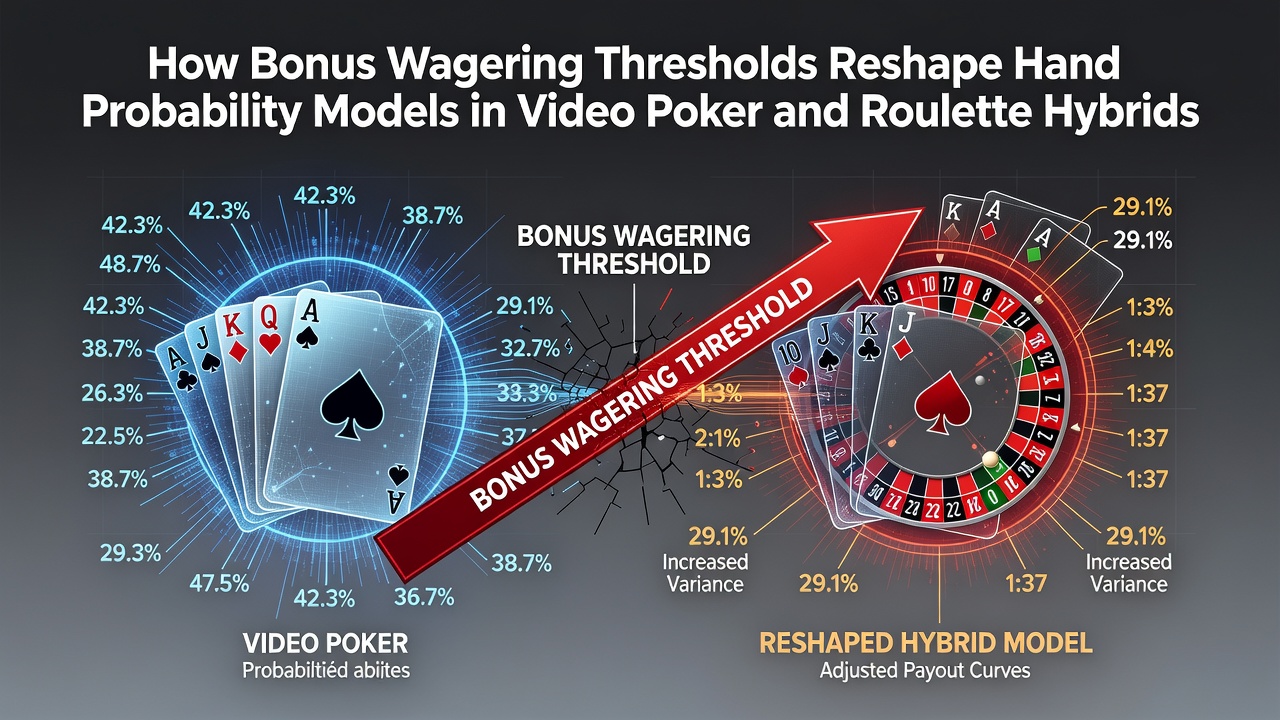
Bonus wagering thresholds alter the underlying calculations that players and systems use when evaluating hand probabilities in video poker and roulette hybrids, and these changes have become more pronounced as game developers integrate layered bonus structures into combined formats. In these hybrids, traditional poker hand rankings intersect with roulette wheel outcomes, which creates new variables that thresholds then modify through required play volumes before any bonus funds convert to withdrawable cash. Data from regulatory reports shows that thresholds often range from 20x to 50x the bonus amount, and this requirement forces adjustments in optimal play strategies because certain hands gain or lose expected value once the remaining wagering obligation is factored in.
Researchers examining hybrid software note that a player facing a 30x threshold on a $100 bonus must generate $3,000 in total wagers before cashing out, and this volume requirement shifts the probability weight toward hands that sustain longer play sessions rather than immediate high-payout draws. Video poker components in these games typically feature Jacks or Better or Deuces Wild variants, yet the roulette element adds wheel spins that trigger bonus multipliers or additional hands, and thresholds then recalibrate the decision trees for holding or discarding cards.
Core Mechanics of Threshold Integration
Hybrid platforms apply thresholds uniformly across both game elements, which means a video poker hand that would normally carry a 1-in-47 probability for a flush now operates under an effective model that discounts that outcome by the remaining wagering balance. Observers tracking software updates in July 2026 report that several major providers introduced dynamic threshold tracking that displays real-time probability adjustments on screen, allowing players to see how each additional wager reduces the effective house edge on specific hands. This visibility stems from updated RNG certification processes required by bodies such as the Nevada Gaming Control Board, whose technical standards now mandate transparency in bonus-related probability displays.
Thresholds also influence bankroll allocation models because players must weigh the cost of completing the requirement against the statistical return of continuing in the hybrid format. A straight draw in video poker, for instance, carries roughly a 17 percent completion rate in isolation, yet under a high threshold the model incorporates the likelihood of triggering roulette-based bonus spins that could accelerate or delay threshold completion.
Probability Model Adjustments in Practice
Studies from academic gaming research groups indicate that thresholds above 40x produce measurable deviations in hand selection frequency, with players more often pursuing lower-variance outcomes that keep them active longer. In roulette hybrids the wheel outcomes feed into poker hand modifiers, and the threshold calculation then treats each spin as both an independent event and a contributor to the overall wagering meter. This dual role means that probability tables published by developers must account for the intersection points where a roulette result either advances or resets progress toward threshold satisfaction.
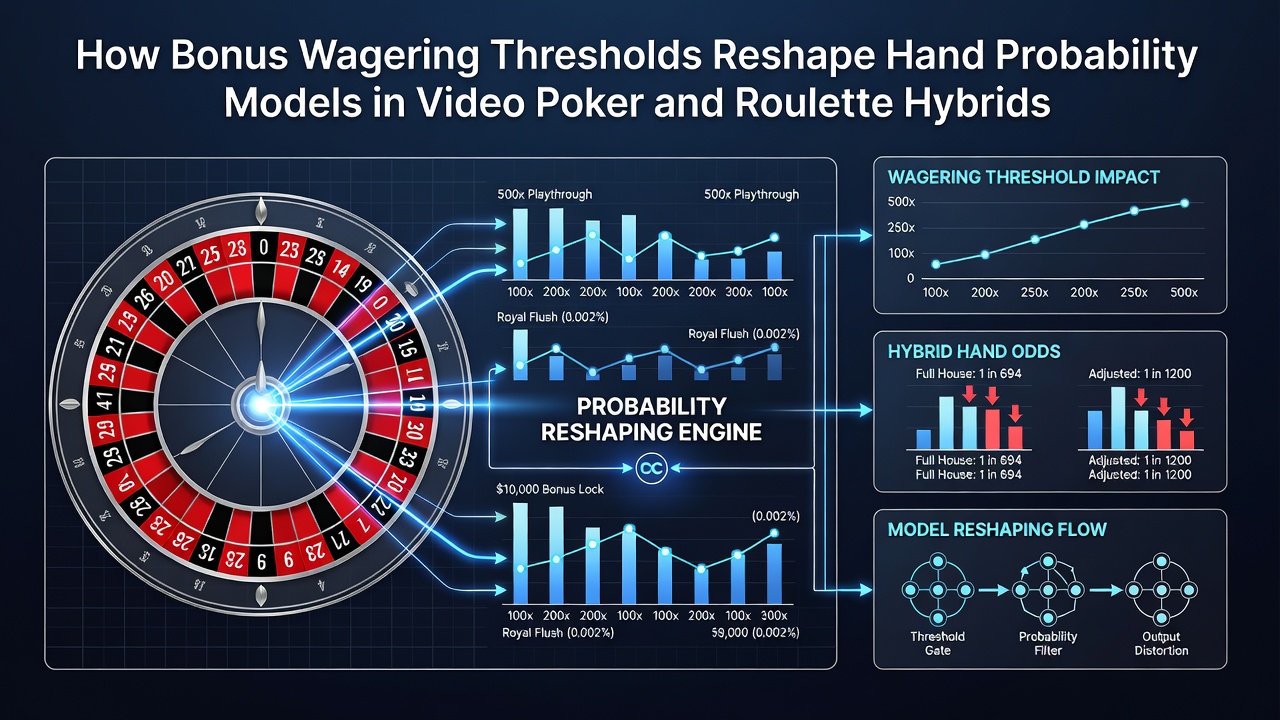
Engineers designing these systems use Monte Carlo simulations to map the revised probabilities, and the results show that threshold completion rates cluster around specific hand types when roulette triggers are present. For example, pairs and three-of-a-kind holdings receive elevated priority in the adjusted model because they maintain session length while still contributing to the meter, whereas high-risk draws such as inside straights drop in frequency once the remaining wagering obligation exceeds a calculated break-even point.
Regulatory and Industry Data Context
Figures released by the Alcohol and Gaming Commission of Ontario reveal that hybrid titles accounted for 18 percent of new game certifications in the first half of 2026, with bonus threshold mechanics cited as a primary factor in the certification reviews. These reviews require operators to submit updated probability models that demonstrate how thresholds interact with hand outcomes across both video poker and roulette components. Similar reporting requirements appear in guidelines from the Australian Communications and Media Authority, which oversees remote gambling technical standards and has begun incorporating threshold transparency rules in its 2026 compliance framework.
Industry associations such as the European Gaming and Betting Association have published white papers documenting how threshold structures affect player session metrics, and the data indicates longer average session durations when hybrids combine poker hands with roulette wheels under unified wagering requirements. These extended sessions arise because the dual mechanics allow players to alternate between card draws and wheel spins while advancing the same threshold meter, which in turn smooths variance in the overall return-to-player calculation.
Software Implementation Patterns
Developers integrate threshold tracking directly into the game engine so that each hand or spin updates both the credit balance and the remaining wagering obligation in real time. This integration produces cascading effects on probability displays, where the on-screen expected value for a given poker hand incorporates the current distance to threshold completion. When the remaining requirement drops below a certain multiple of the average bet size, the model shifts again and previously suboptimal hands regain their original ranking in the decision hierarchy.
Case examples from certified hybrid titles demonstrate that threshold resets triggered by specific roulette outcomes can either accelerate or hinder progress, and players adapt by selecting hands that align with the most probable reset or advancement paths. The resulting strategy adjustments appear in updated optimal play charts that operators must file with regulatory bodies during the approval process.
Conclusion
Bonus wagering thresholds continue to modify hand probability models in video poker and roulette hybrids through direct integration into game engines and regulatory-mandated transparency requirements. Data from multiple jurisdictions shows that these modifications produce measurable changes in hand selection patterns and session metrics, while software updates scheduled for later in 2026 are expected to introduce further refinements to the dynamic probability displays. The interplay between poker hand rankings, roulette outcomes, and threshold meters therefore remains a central consideration in the ongoing development and certification of these hybrid formats.