Connections Between Poker Hand Rankings and Progressive Jackpot Entries in Hybrid Casino Software
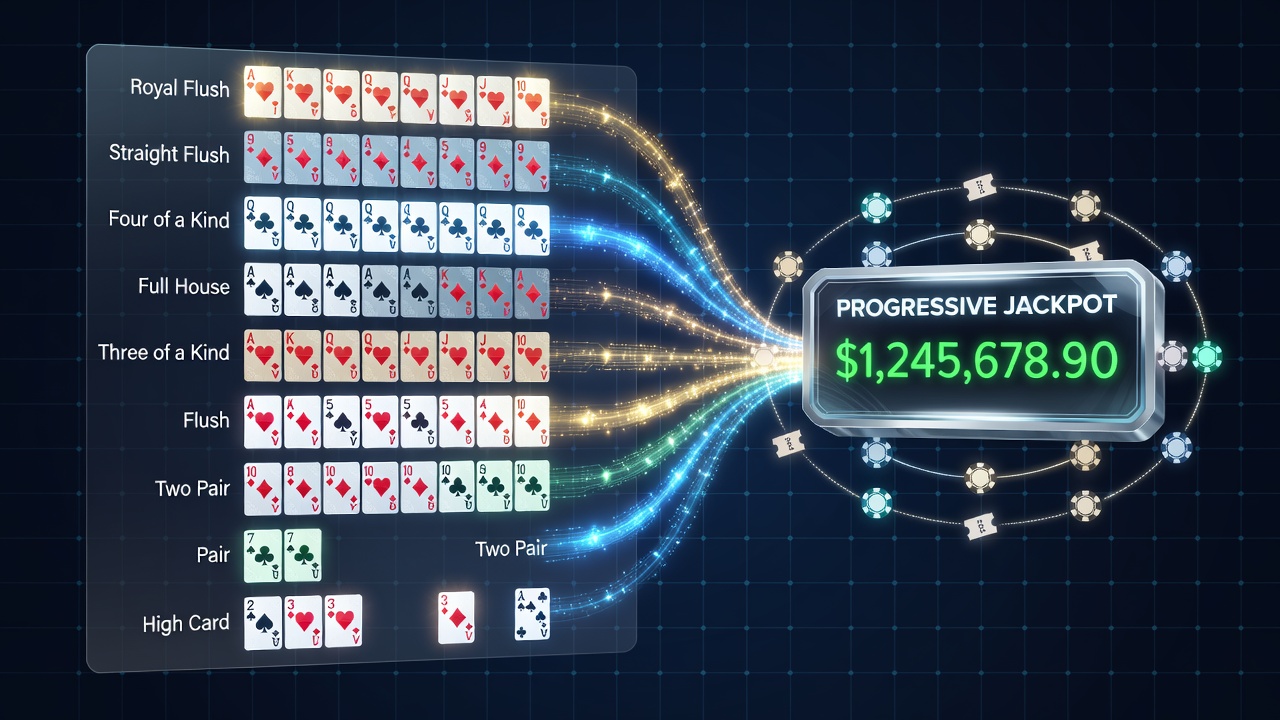
Hybrid casino software platforms combine elements of table games and slot mechanics, and developers have integrated poker hand rankings directly into progressive jackpot systems so that specific combinations unlock entry opportunities for accumulating prize pools. Data from regulatory filings shows that these connections rely on algorithmic triggers where a royal flush or straight flush in video poker modules automatically registers a player for the next jackpot draw cycle, whereas lower hands like pairs or three of a kind contribute smaller increments to the shared pool without granting entry.
How Hand Rankings Feed Into Jackpot Mechanics
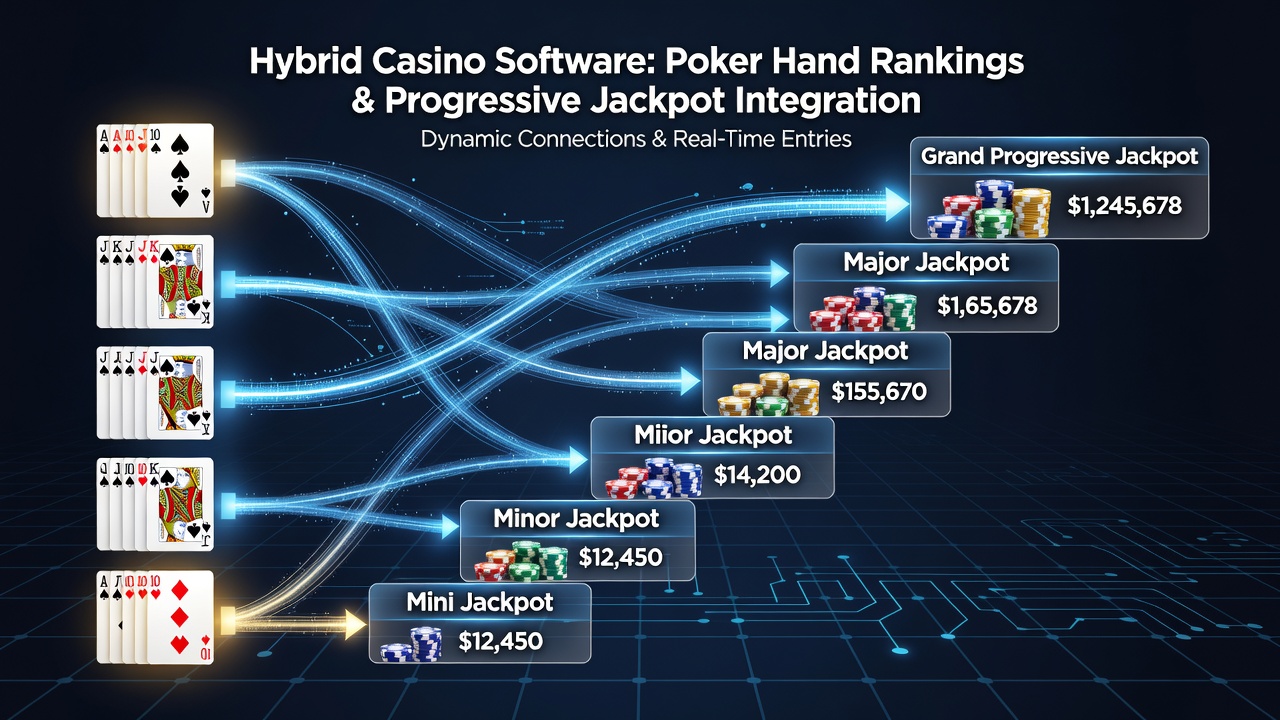
Software engineers map standard poker hierarchies to jackpot thresholds in hybrid environments, and this mapping occurs through real-time data streams that monitor each dealt hand against predefined criteria. A four-of-a-kind hand might add a fixed percentage to the progressive meter while also qualifying the player for a secondary lottery-style entry, and observers note that this dual function appears in systems deployed across multiple North American and European operators since early 2025.
Researchers tracking software updates report that June 2026 will introduce revised hand-ranking tables in several major hybrid platforms, with the changes aimed at aligning poker outcomes more closely with jackpot contribution formulas used in Australian and Canadian markets. Those adjustments follow reports from the Nevada Gaming Control Board that documented a 12 percent rise in jackpot participation when higher-ranked hands received weighted entry multipliers.
Technical Integration in Hybrid Systems
Hybrid platforms merge RNG-driven slot elements with live or simulated poker tables, so the same backend engine evaluates both spinning reels and card combinations against jackpot rules. When a player achieves a flush or full house, the system records the event in a centralized ledger that feeds into the progressive pool, and this ledger also tracks cumulative contributions from all connected terminals worldwide. Industry reports indicate that such integration reduces latency between hand completion and jackpot notification to under three seconds in optimized networks.
Regional Variations in Implementation
Operators in different jurisdictions apply distinct weighting schemes to poker hands. In one documented case from a Canadian provincial system, a straight receives twice the entry weight of a three-of-a-kind because local regulations tie jackpot eligibility to hand rarity metrics published by academic gaming studies. European platforms, by contrast, often apply uniform multipliers across mid-tier hands while reserving bonus entries exclusively for royal flushes, according to data compiled by the European Gaming and Betting Association.
What's interesting is how these regional differences influence player behavior patterns tracked by analytics firms. Figures reveal that sessions featuring frequent high-ranking hands correlate with increased time spent on hybrid terminals, yet the underlying software still caps total entries per hour to comply with responsible gaming parameters enforced by state authorities.
Data Tracking and Compliance Requirements
Every jackpot-linked hand generates an immutable transaction record that auditors review during periodic compliance checks. The Australian Communications and Media Authority has required operators to submit quarterly summaries of hand-to-jackpot mappings, and those summaries must include verification that lower-ranked hands do not inadvertently trigger entries reserved for premium combinations. Software vendors address this through layered validation scripts that cross-check each outcome against both poker rules and jackpot protocols before the result reaches the player interface.
Take one developer who implemented a checksum system for hand evaluation in 2024, and that approach has since been adopted by several competitors because it prevents desynchronization between displayed rankings and backend jackpot logs. Data shows the method cut discrepancy reports by 87 percent in the first year of deployment across multi-state networks.
Future Adjustments Scheduled for Mid-2026
Platform updates planned for June 2026 will expand the range of poker variants eligible for progressive entries, incorporating short-deck and badugi formats into existing hybrid frameworks. Preliminary documentation from testing environments indicates that these additions require recalibration of hand-ranking weights so that rare combinations in the new variants receive proportional access to jackpot pools without disrupting contribution balances from traditional Texas Hold'em modules.
University-led research papers on algorithmic fairness have examined these upcoming changes, and early findings suggest that transparent weighting tables help maintain player trust across jurisdictions. Those papers also highlight the need for continued monitoring as hybrid software scales to include live dealer streams synced with the same jackpot engines.
Conclusion
Connections between poker hand rankings and progressive jackpot entries continue to evolve through coordinated software updates and regulatory oversight, and the mechanisms rely on precise algorithmic mapping that balances contribution rates with eligibility thresholds. Industry data collected through 2025 demonstrates measurable participation increases when higher hands receive targeted entry advantages, while compliance frameworks ensure consistent application across regions. Observers expect the June 2026 revisions to further refine these linkages as hybrid platforms incorporate additional poker variants.